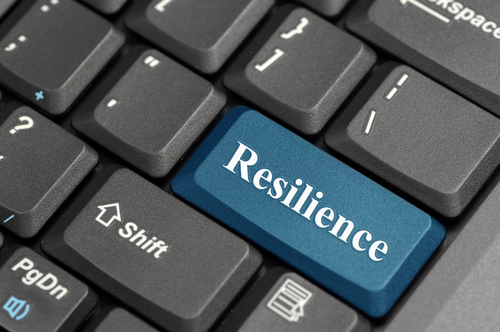
How can businesses incorporate resilience into everyday strategies?
From pandemics and geopolitical conflicts to trade wars and energy shocks, UK businesses are facing a period of enduring uncertainty.
As a result, resilience and adaptability have become central to commercial success, helping businesses prepare for and overcome disruption when it arrives.
Incorporating resilience into everyday strategies and moving toward a more flexible operating model can help businesses stay competitive and build value in volatile conditions.
What does business resilience look like?
Commercial resilience can be defined as a business’s ability to anticipate, absorb and adapt to changing environments and unexpected disruptions.
Greater preparedness reduces the impact of a shock, which can then be followed by a swifter and more complete recovery.
While prioritising resilience can be challenging due to conflicting interests and budgets, there are a few key aspects your business should consider.
Below are the key building blocks of business resilience, alongside some practical steps that can be taken:
Financial strength:
Together, liquid cash reserves, a low debt-to-equity ratio and diversified revenue streams can give a business the financial flexibility needed to absorb uncertainty.
If your business finds itself struggling to meet obligations during periods of downturn, it might be advisable to implement a rolling cash reserve.
Setting aside a fixed percentage of monthly income into a liquid, high-yield account can help you build a reserve which can cover a few months of operating expenses if profits fall.
Adaptability:
Monitoring markets, technology and customer expectations can keep a business informed and poised to respond to changes as they arise.
Your business can remain adaptable by implementing technology to track market trends and compile client feedback.
Once this data has been collected, regular meetings should be scheduled to review the information and implement changes based on the insights provided.
Strong systems:
Moving away from dependency on a handful of people can allow your business to successfully scale and continue to create long-term value.
To broaden leadership capacity, you could start by mapping out decision-making.
Recording who is responsible for each decision and how choices should be made can eliminate bottlenecks and ensure a company operates effectively even without the top leadership present.
In addition, you can encourage key members to rotate roles for a week every year, which can help to stress-test workflows.
Not only can a fresh pair of eyes help to identify dependencies and breaking points, but the exercise can also cross-train members of staff in other departments.
Critical knowledge could also be transferred onto searchable online databases that are regularly updated, allowing team members to retrieve information without reliance on other staff.
Diverse client base:
Relying on a small, interlinked client base can leave your business exposed to changes in consumer demand and market instability.
To remedy this, your business could set an operational cap on the total share of revenue from a single client.
For example, if a client were to account for 10 per cent to 15 per cent of total income, you may wish to balance this out by actively shifting sales and marketing focus to a new demographic of customers.
Regular strategic reviews:
Proactively auditing performance, identifying risks and capitalising on opportunities when they arise can deliver better results down the line.
In order to ensure your business is ahead of the curve, quarterly meetings can be scheduled to identify scenarios which could have extensive fallout, such as losing a key client.
Where situations are identified as potentially disastrous for your business, creating simple contingency plans can boost preparedness.
Similarly, regular check-ins allow your team to highlight where profits can be grown and competitors can be outperformed, ensuring your business remains agile.
Speak to an accountant
During uncertain economic conditions, an accountant can act as a long-term strategic partner.
We can help you create rolling cash reserves, model potential scenarios, stress-test your cash flow and free up any money tied up in inefficient tax structures.
By regularly auditing your business performance and responding to external changes, we can help your business stay agile and equipped to handle the challenges ahead.
Looking to build resilience into your everyday strategies? Speak to our accountants for ongoing support with managing uncertainty.